

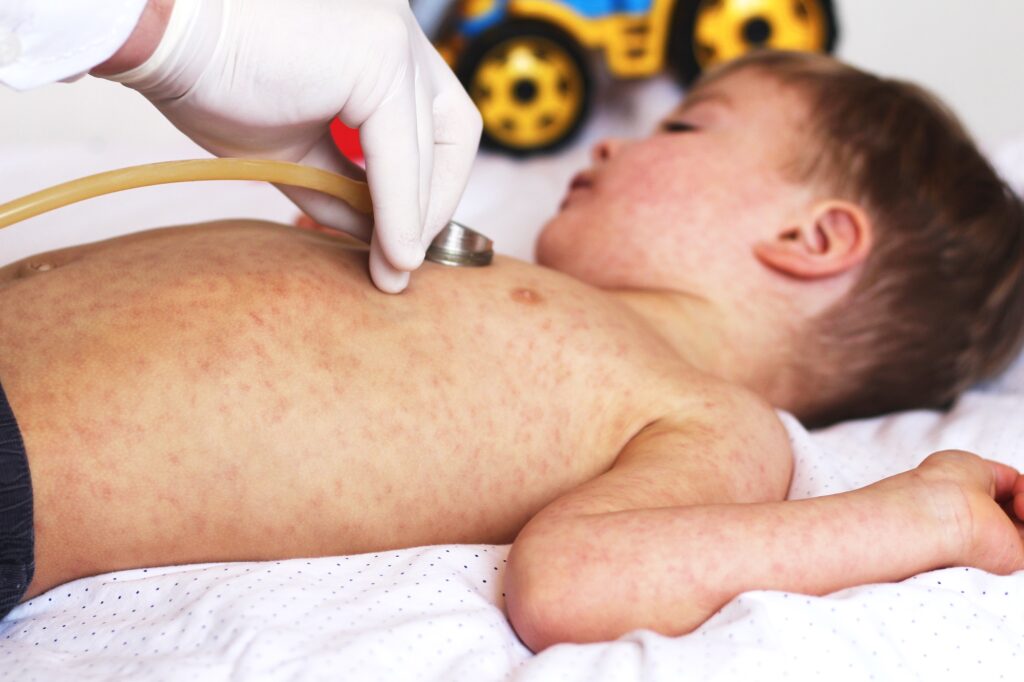
This article was updated on 27/2/2026 to reflect changes introduced by the UK Government in January 2026.
Measles Risk in Unimmunised Children: What Every Parent Needs to Know
Measles poses a serious threat to children who haven’t received their vaccinations, with the UK experiencing a significant and ongoing outbreak in 2025 and into 2026. Unimmunised children face the highest risk of contracting measles, with most cases occurring in older unvaccinated children during localised outbreaks across England. The disease, which was largely controlled through vaccination programmes, has made a serious comeback in certain communities — and the current situation demands urgent attention from every parent.
If your child hasn’t received their measles vaccine, they remain vulnerable to a disease that can cause severe complications and even death. Children living in deprived areas are more than 10% less likely to be vaccinated compared to those in affluent areas, creating pockets of susceptibility where measles can spread rapidly. Understanding these risks and the factors that influence vaccination uptake is crucial for protecting your family.
The consequences of leaving children unimmunised extend beyond individual health risks. When vaccination coverage drops in communities, it creates opportunities for measles to spread quickly amongst vulnerable populations. This article explores the current situation in the UK, examines why some children remain unprotected, and provides practical guidance on reducing measles risk for unimmunised children.
Key Takeaways
- Unimmunised children face the highest risk during measles outbreaks, particularly in areas with low vaccination coverage
- Social factors, including deprivation, ethnicity, and maternal age, significantly influence vaccination uptake rates across the UK
- From 1 January 2026, the NHS replaced the MMR vaccine with the new combined MMRV vaccine, which also protects against chickenpox (varicella)
- A catch-up programme offering MMRV to children under 6 is planned to run from November 2026
- Preventing future outbreaks requires targeted strategies to improve vaccine access and address barriers to immunisation
Understanding Measles Risk in Unimmunised Children
Unimmunised children face significantly higher risks of contracting measles and developing serious complications. The disease spreads rapidly through airborne droplets in community settings, with unprotected children experiencing more severe symptoms and longer recovery times.
Why Unimmunised Children Are Vulnerable
Your child’s immune system has no protection against measles without vaccination. The virus directly attacks the immune system, rendering it weaker for months after infection.
Unimmunised children are 15 times more likely to catch measles during outbreaks. Household size and social factors further increase risk.
The measles virus is highly contagious. One infected person can spread it to 12–18 others in a community without immunity.
Children under 5 years old face the highest risk of severe complications. These include pneumonia, brain swelling, and permanent hearing loss.
Your child’s vulnerability increases during measles outbreaks in schools and communities. Most cases occur in older, unvaccinated children who missed their scheduled vaccines.
Transmission Pathways in Schools and Communities
Measles spreads through tiny droplets when infected people cough or sneeze. The virus can survive in the air for up to 2 hours after an infected person leaves a room.
High-risk locations include schools and nurseries, shopping centres, public transport, medical waiting rooms, and playgrounds and parks.
Your child can catch measles by breathing contaminated air or touching infected surfaces. The virus enters through the nose, mouth, or eyes.
During the largest outbreaks in recent years, 21% of confirmed cases required hospitalisation. Schools become hotspots during outbreaks because children spend a significant amount of time together in enclosed spaces. Your child remains contagious from 4 days before the rash appears until 4 days after the rash appears.
Severity of Measles for Unprotected Children
Unimmunised children experience more severe measles symptoms than those with vaccine protection. The illness typically lasts 7–10 days, but complications can persist for weeks.
Common severe symptoms include high fever above 40°C, severe cough and breathing difficulties, painful sensitivity to light, and dehydration from vomiting and diarrhoea.
Your child faces serious complications in 1 in 4 cases. Pneumonia occurs in approximately 1 in 20 children, while brain inflammation affects around 1 in 1,000 cases.
Children under 5 years of age are at greater risk of developing measles complications. Death occurs in 1–2 per 1,000 cases, usually from pneumonia or brain swelling.
Recovery takes longer in unimmunised children. The weakened immune system leaves your child vulnerable to other infections for months afterwards.
Pregnant women and babies under 12 months cannot receive the vaccine, making community protection crucial for their safety.
Current Measles Situation in the UK
The UK is currently experiencing a sustained and serious measles outbreak. England recorded 2,911 laboratory-confirmed measles cases in 2024 — the highest annual total since 2012 — followed by 959 confirmed cases in 2025, during which one measles-related death occurred in a child with underlying health conditions. Cases have continued to rise in early 2026, with an active outbreak centred on North London, particularly Enfield, alongside significant case numbers in the West Midlands. As of late February 2026, there have been 158 confirmed cases since January alone, concentrated predominantly in children under 10 years of age. These laboratory figures are likely a significant underestimate, as the majority of measles cases in the community are never confirmed through laboratory testing.
Recent Trends in Measles Cases
The UKHSA declared a national incident on 19 January 2024 in response to the sharp increase in measles cases across the country. The outbreak continued throughout 2024 and 2025, and has intensified again in early 2026. In the most recent reporting period, London accounted for 66% of all confirmed 2026 cases, with the West Midlands accounting for a further 21%. The majority of confirmed cases — 76% — are in children aged 10 and under, though adults account for approximately 18–25% of cases.
Laboratory-confirmed cases represent only a fraction of actual infections. Most measles cases in the community are not confirmed through laboratory testing, meaning true case numbers are substantially higher than reported figures.
Areas of High Outbreak Risk
London remains the most vulnerable region, with Enfield recording the highest number of cases in England in early 2026 and Birmingham second. The North West of England has also experienced notable outbreaks, with cases reported across 20 upper-tier local authorities since January 2026 alone.
Several specific communities continue to face elevated risk of measles transmission, including Charedi Orthodox Jewish communities, Traveller communities, Steiner (Anthroposophic) communities, and areas with higher concentrations of recent international migrants. Your postcode may influence your child’s exposure risk, particularly in areas with historically low vaccination rates.
Impact of Global Outbreaks on the UK
International measles trends have a direct impact on the UK’s outbreak situation. The World Health Organisation reported a nearly 50-fold increase in measles cases across its 40 European Region member states, rising from fewer than 1,000 cases in 2022 to 42,200 cases in 2023, with the resurgence continuing in subsequent years. The United States reported over 1,267 confirmed measles cases and 3 deaths in 2025 alone.
This global context increases your child’s risk through international travel and migration patterns. England lost its measles-free status in 2019 due to endemic measles transmission, highlighting the ongoing vulnerability to both domestic spread and imported cases.
Consequences of Not Being Immunised
Unimmunised children face significant health risks during measles outbreaks, including severe complications that can lead to hospitalisation and long-term developmental issues. The consequences extend beyond the initial infection and can affect a child’s health for years.
Complications and Health Risks
Your child faces serious health complications if they contract measles without immunisation. The virus attacks your child’s immune system, making them vulnerable to secondary infections.
Respiratory complications are the most common serious effects. Your child may develop pneumonia, which occurs in approximately 1 in 20 cases of measles. This can be life-threatening, especially in children under five years old.
Neurological complications pose severe risks to your child’s brain development. Encephalitis affects approximately 1 in 1,000 children with measles. This brain inflammation can cause seizures, hearing loss, intellectual disability, and behavioural changes.
Secondary bacterial infections commonly occur because measles weakens your child’s immune system for several months. Your child becomes more susceptible to ear infections, diarrhoea, and severe bacterial pneumonia.
The virus also causes a distinctive rash and high fever exceeding 39°C. Your child will likely experience severe discomfort, including painful mouth sores that make eating and drinking difficult.
Hospitalisations and Mortality
Your child faces a substantial risk of hospitalisation if they contract measles whilst unimmunised. Approximately 1 in 10 children with measles require hospital treatment for complications.
Hospital admission rates are highest amongst children under five years old and those with underlying health conditions. Your child may need intensive care if they develop severe pneumonia or encephalitis.
Mortality risk remains significant despite modern medical care. Deaths typically occur from pneumonia or encephalitis complications. The 2006 UK measles outbreak resulted in the first death since 1992, and in 2025 a further measles-related death occurred in England, highlighting the continuing serious consequences for unprotected children.
Critical care requirements may include oxygen therapy for respiratory distress, intravenous fluids for dehydration, anticonvulsant medications for seizures, and intensive monitoring for brain complications.
Your child’s age significantly affects their survival chances, with infants under 12 months facing the highest mortality risk.
Long-Term Impacts on Children
Your child may experience lasting effects from measles infection that persist long after recovery. These impacts can affect their development, learning, and overall quality of life.
Immune system suppression continues for months after your child recovers from measles. This prolonged vulnerability increases their risk of contracting other serious infections throughout early childhood.
Developmental delays can occur following measles encephalitis. Your child may experience difficulties with speech, motor skills, and cognitive development that require ongoing specialist support and therapy.
Hearing impairment affects some children who survive complications from measles. Your child might need hearing aids or other interventions to support their communication and learning.
The educational impact becomes apparent when children miss significant school time due to illness and subsequent recovery. Some children require additional educational support to catch up with their peers.
Subacute sclerosing panencephalitis (SSPE) represents the most serious long-term consequence. This rare but fatal brain condition develops years after measles infection, occurring in approximately 1 in 25,000 cases. Children who contract measles before age two face the highest SSPE risk.
Your child’s overall health and development trajectory can be permanently altered by measles complications, emphasising the importance of prevention through immunisation.
The Importance of the MMRV Vaccine
From 1 January 2026, the NHS replaced the MMR (measles, mumps, rubella) vaccine with a new four-in-one combined vaccine: MMRV (measles, mumps, rubella, and varicella/chickenpox). This important change adds protection against chickenpox for the first time in the routine NHS childhood schedule, reducing the number of separate injections children need while broadening the protection they receive. The MMRV vaccine has been used safely for over a decade in countries including the USA, Canada, Australia, and Germany, all of which have seen substantial decreases in cases and hospital admissions since introducing their programmes.
How the MMRV Vaccine Protects Against Measles
The MMRV vaccine contains weakened versions of all four viruses, training your child’s immune system to recognise and fight them without causing illness. When your child receives the vaccination, their body produces antibodies that provide long-lasting protection.
The new two-dose MMRV schedule (for children born on or after 1 January 2025):
- First dose: 12 months
- Second dose: 18 months
This represents an important change from the previous MMR schedule, which gave the second dose at 3 years and 4 months. Bringing the second dose forward to 18 months means children receive full protection significantly earlier — a critical advantage given the ongoing measles outbreaks across England.
Children born at different times may follow slightly different transition schedules depending on when they first received MMR or MMRV. Your GP or private paediatric provider can advise on the correct schedule for your child’s specific date of birth.
Protection Against Mumps, Rubella, and Chickenpox
The MMRV vaccine protects against mumps, which causes painful swelling of the glands around the ears and jaw. Mumps can lead to serious complications, including meningitis, deafness, and fertility problems in males.
Rubella protection remains equally important, particularly for preventing congenital rubella syndrome, which can cause heart problems, blindness, and learning difficulties in babies born to mothers who contract rubella during pregnancy.
The important new addition is protection against chickenpox (varicella). While many parents consider chickenpox to be a mild illness, it can cause serious complications in some young children, vulnerable adults, and pregnant women, and is estimated to cost the UK economy £24 million per year in lost productivity. The NHS expects the MMRV programme to save £15 million per year in treatment costs alone.
Effectiveness and Safety of MMRV Vaccination
The MMRV vaccine is highly effective when given as two doses. Most children who receive both doses develop strong immunity to all four diseases.
| Disease | Protection |
|---|---|
| Measles | 97% after two doses |
| Mumps | 88% after two doses |
| Rubella | Over 97% after one dose |
| Chickenpox (varicella) | High effectiveness; one dose provides very good protection against severe disease |
Research has thoroughly investigated concerns about vaccine safety, and multiple studies have found no link between MMR or MMRV vaccination and autism. Serious side effects are extremely rare. Mild reactions such as fever or rash affect only a small number of children and resolve quickly. There is a small, well-characterised increased risk of febrile convulsions after the first MMRV dose compared to MMR alone; this remains uncommon and is far outweighed by the benefits of vaccination. Parents with concerns can discuss this with their healthcare provider.
MMRV uptake rates in the UK remain below 95%, the level needed for community protection. This leaves unvaccinated children at continued risk of infection — as the current outbreak clearly demonstrates.
Immunisation Coverage and Challenges in the UK
The UK has not yet reached the 95% coverage threshold needed for both doses to eliminate measles, and uptake has fallen to its lowest level in a decade. Coverage rates vary between regions, and specific barriers continue to impact vaccination uptake in certain communities.
Statistics on Immunisation Uptake
England’s MMR vaccination coverage showed steady improvement following the decline in the early 2000s, with first dose coverage reaching 95% in children aged 5 years for the first time in 2016 and 2017. However, coverage has since declined and currently falls below the optimal level for many birth cohorts. Data from vaccination studies show median susceptibility rates of 4.6% across the population, with some cohorts reaching 9.2%.
Children born between 1998 and 2004 remain most vulnerable to measles. These cohorts experienced the lowest vaccination rates during the MMR controversy period.
Current statistics show first MMR or MMRV dose coverage consistently over 90% since 2012, second dose coverage at around 87–88%, and a target coverage of 95% for both doses that has not been met in any region of England.
Regional Disparities in Vaccine Coverage
Vaccination coverage varies significantly across different regions and communities within the UK. Structural barriers affect specific populations, particularly Traveller communities.
Urban areas, including London, often experience lower coverage rates and localised outbreaks amongst unvaccinated populations, despite higher overall population density and healthcare access. Similar disparities have been identified in Wales and across other parts of the UK, highlighting the need for targeted interventions.
University students represent another vulnerable group, particularly those who missed childhood vaccinations during the MMR controversy period.
Barriers to Improving Coverage
Multiple factors contribute to suboptimal immunisation coverage across the UK. Vaccine hesitancy remains a significant challenge, requiring targeted trust-building interventions.
Primary barriers include safety concerns about vaccination, access issues in underserved communities, poor service delivery in some areas, and data accuracy problems affecting coverage estimates. Children with neurodevelopmental disorders are more likely to remain unimmunised. Some communities experience poor access to healthcare services, making routine immunisations difficult to obtain.
Strategies to Reduce Measles Risk for Unimmunised Children
The UK employs targeted vaccination programmes and educational campaigns to protect unimmunised children from measles outbreaks. Strategies targeting unvaccinated children before they enter primary school have proven effective in reducing the transmission of disease.
Catch-Up Vaccination Programmes
The NHS runs catch-up vaccination programmes to immunise children who have missed their routine doses. From 1 January 2026, all catch-up vaccination for children born on or after 1 January 2020 uses the MMRV vaccine rather than the older MMR, ensuring that children catching up on missed doses also receive protection against chickenpox. Children born on or before 31 December 2019 who have not completed two doses remain eligible for free NHS MMR vaccination at any age.
Importantly, a dedicated MMRV catch-up programme for children under 6 is scheduled to run from November 2026 to March 2028. This will offer a single dose of MMRV to children aged 3 years 4 months to under 6 years (born between 1 January 2020 and 31 August 2022) who have no prior history of chickenpox infection or two doses of varicella vaccination. GP practices will invite eligible children automatically, and there is no requirement for parents to check for prior chickenpox before attending.
School-based vaccination also forms the cornerstone of catch-up efforts. Teams visit schools to identify and vaccinate children without complete immunisation records, targeting children whose parents may have initially declined vaccination. Community clinics and walk-in clinics during school holidays provide additional opportunities for catch-up immunisations.
Age-specific strategies address different risk groups. Infants under 12 months may receive early measles-containing vaccine if exposed to a confirmed case or travelling to a high-risk country. Toddlers aged 12–24 months receive priority scheduling. School-age children can receive catch-up doses through their GP or local health service.
Public Health Campaigns for Parents
Public health authorities run evidence-based campaigns to address vaccine hesitancy amongst parents. These campaigns counter misinformation and provide accurate information about the safety and effectiveness of MMRV vaccination.
Targeted messaging addresses specific concerns parents raise about the vaccine. Health professionals use peer-reviewed research to demonstrate vaccine safety, and campaigns emphasise the real and serious complications of measles in unvaccinated children.
Healthcare provider training ensures consistent messaging across all services. GPs and health visitors receive updated guidance on discussing immunisations with hesitant parents, building trust through professional relationships.
Community engagement involves local leaders and parent groups in promoting vaccination. Digital campaigns use social media and websites to reach younger parents, while mobile apps and GP systems send immunisation reminders to families.
Preventing Future Measles Outbreaks
Stopping measles outbreaks requires keeping vaccination rates above 95% and ensuring healthcare providers actively promote MMRV vaccination. The introduction of the MMRV vaccine, with its earlier second dose at 18 months, gives children full protection at a younger age — a critical advantage given current outbreak conditions in England. These strategies work together to protect communities from dangerous and entirely preventable outbreaks.
Maintaining High Vaccination Rates
You need 95% of the population to have received both doses of MMRV (or MMR, for older cohorts) to prevent outbreaks from occurring. England currently falls short of this target and no area in England reaches 95% coverage for both doses. This leaves gaps where measles can spread quickly, as the current outbreak demonstrates.
Key vaccination strategies include catch-up campaigns for missed doses, school-based vaccination programmes, community outreach in low-uptake areas, and easy access to vaccination services. You can protect your community by ensuring your family’s vaccinations are up to date. Children who miss their scheduled doses can still get catch-up vaccinations later.
The Role of Healthcare Providers
Healthcare providers play a crucial part in preventing measles outbreaks. GPs and practice nurses should check vaccination records at every appointment, helping to catch missed doses before outbreaks occur. They should offer catch-up vaccinations when needed, address vaccine hesitancy with facts, and report suspected measles cases quickly.
Your GP can answer questions about MMRV safety and timing. They have access to your complete vaccination history and can recommend the best schedule for your family. Clear communication about vaccine benefits helps parents make informed decisions about protecting their children.
Frequently Asked Questions
What is the likelihood of unvaccinated children contracting measles in the UK?
Your child faces a much higher risk of contracting measles if they remain unvaccinated. The UK is currently experiencing a significant ongoing outbreak, with 2,911 confirmed cases in 2024, 959 in 2025, and cases continuing to rise in early 2026. During measles outbreaks, unvaccinated children have up to a 90% chance of contracting the disease if exposed. Your child’s risk increases if they live in London, the West Midlands, or the North West of England, or in a household with multiple children.
What complications can arise in unimmunised children who contract measles?
Your child can experience serious complications from measles infection. Common complications include pneumonia, brain inflammation (encephalitis), and severe diarrhoea. Measles can cause permanent hearing loss and intellectual disability. In severe cases, the infection can be fatal, particularly in children under five years old.
Secondary bacterial infections often occur because measles weakens your child’s immune system. This increased vulnerability can last for weeks or months after recovery.
How does the MMRV vaccine protect children from measles?
The MMRV vaccine creates immunity by introducing weakened versions of the measles, mumps, rubella, and varicella (chickenpox) viruses. Your child’s immune system learns to recognise and fight these diseases without experiencing the actual illness.
Two doses of the MMRV vaccine provide approximately 97% protection against measles. The vaccine creates long-lasting immunity that typically persists throughout your child’s lifetime. Your child develops antibodies within two to three weeks after vaccination, providing protection if they come into contact with the measles virus.
At what age should children in the UK receive the MMRV vaccination?
From 1 January 2026, the NHS offers the MMRV vaccine instead of MMR as part of the routine childhood immunisation schedule. For children born on or after 1 January 2025, the first dose is given at 12 months and the second dose at 18 months. This is a significant change from the previous schedule, where the second dose was given at 3 years and 4 months. The earlier second dose provides full protection before your child turns 2, which is especially important given the current outbreak.
Children born at different times may be on different transition schedules. Speak to your GP or paediatric provider for guidance specific to your child’s date of birth.
If your child has missed their scheduled vaccinations, catch-up doses are available at any age. Children born from 1 January 2020 are caught up using MMRV; those born on or before 31 December 2019 are eligible for MMR catch-up doses free on the NHS.
Can individuals who have received the MMRV vaccine still transmit measles to unimmunised children?
Vaccinated individuals rarely transmit measles to unimmunised children. The MMRV vaccine uses weakened viruses that cannot cause infection in others through normal contact.
Breakthrough infections can occasionally occur in vaccinated individuals, but these cases are typically milder. Even when breakthrough infections happen, transmission to others is far less likely than from unvaccinated cases.
Your vaccinated child provides indirect protection to unimmunised children through community immunity. This protection works effectively when vaccination coverage remains high across the population.
What are the current measles vaccination coverage rates in the UK?
Current UK vaccination coverage falls below the recommended 95% threshold needed for community protection, and uptake has fallen to its lowest level in a decade. This shortfall is directly reflected in the ongoing measles outbreak across England. Regional variations exist, with London and other urban areas often showing lower vaccination uptake and higher case numbers.
Children who have missed their routine vaccinations should be caught up as soon as possible. If your child was born from 1 January 2020, they are eligible for MMRV catch-up vaccination. An NHS MMRV catch-up programme specifically for children under 6 is also planned to run from November 2026 to March 2028.
How Bright Futures Health Can Help
Bright Futures Health offers comprehensive immunisation status reviews for children who may have missed their MMRV or MMR vaccinations. Given the ongoing measles outbreak across England — with cases rising particularly sharply in London and the West Midlands in early 2026 — now is an important time to check your child’s vaccination status and act if doses have been missed.
Our healthcare professionals can assess your child’s vaccination history, identify any gaps in protection, and advise you on exactly which vaccine and schedule applies to your child based on their date of birth. We can provide catch-up vaccinations for those who have missed doses, and offer guidance on the planned NHS under-6 MMRV catch-up programme ahead of its rollout in November 2026.
Key services include complete vaccination record reviews, age-appropriate catch-up schedules following the latest NHS guidelines, pre-travel vaccination assessments, and professional health consultations for families with concerns about vaccine safety or timing.
Parents who have previously delayed vaccinations or have questions about the differences between the old MMR and the new MMRV vaccine can receive clear, evidence-based information from our qualified healthcare team. We address concerns about vaccine safety and effectiveness with up-to-date clinical information, without judgment.
Convenient appointment options at our Chiswick and central London locations make it easier for busy families to access vaccination services, removing barriers that might otherwise prevent children from receiving essential immunisations.
Visit Bright Futures Health to book an immunisation review and ensure your child has the best possible protection against measles and other preventable diseases.

